
 EN
EN

Selecting the right luggage trackers for bulk procurement requires careful evaluation of technical specifications, operational reliability, and total cost of ownership. Organizations ranging from hospitality chains to corporate travel departments increasingly rely on these devices to minimize baggage loss, streamline asset management, and enhance customer service standards. Understanding which features distinguish commercially viable luggage trackers from consumer-grade alternatives enables procurement teams to make informed decisions that align with operational scale, budget constraints, and long-term deployment requirements.
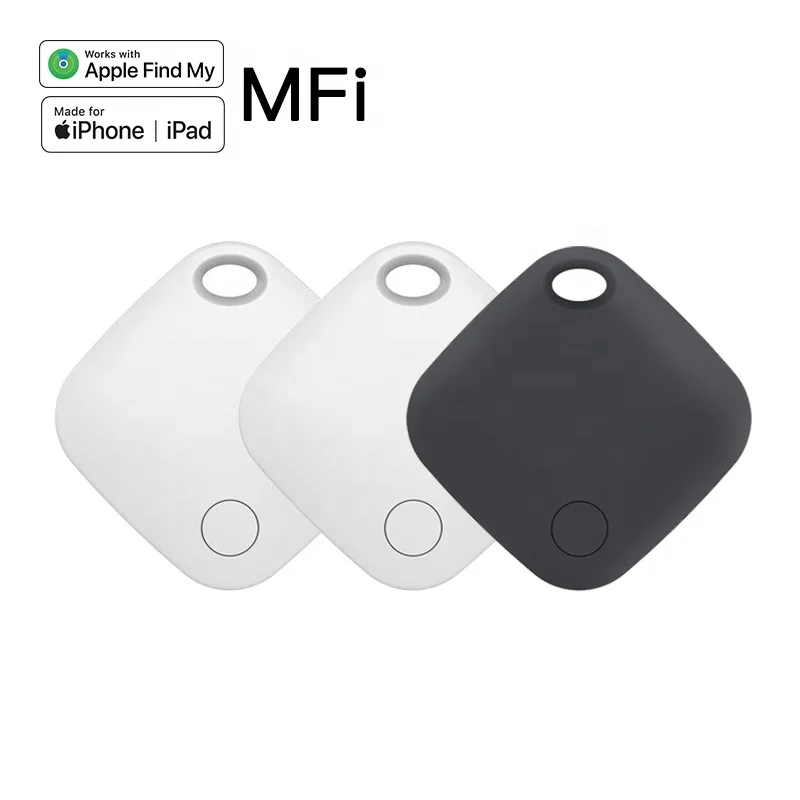
The transition from individual consumer purchases to bulk supply scenarios introduces distinct evaluation criteria that directly impact deployment success. Large-scale implementations demand hardware consistency, simplified provisioning workflows, and predictable maintenance patterns that smaller deployments can often overlook. This article examines the specific technical features, operational characteristics, and business-critical capabilities that define whether luggage trackers meet the rigorous demands of bulk supply environments across diverse commercial applications.
Battery Performance and Power Management Architecture
Extended Operational Lifespan Requirements
Battery longevity stands as the foremost practical consideration when evaluating luggage trackers for bulk deployment. Devices intended for commercial use must deliver sustained operation spanning months rather than weeks to minimize maintenance overhead and reduce total cost of ownership. Organizations procuring hundreds or thousands of units cannot afford frequent battery replacement cycles that create logistical burdens and disrupt operational continuity. High-quality luggage trackers designed for bulk supply typically incorporate rechargeable lithium polymer cells rated for 300 to 500 charge cycles, providing predictable replacement timelines that align with standard asset refresh schedules.
The distinction between consumer and commercial battery specifications becomes particularly evident in discharge curve stability. Enterprise-grade luggage trackers maintain consistent transmission power throughout the discharge cycle, preventing premature connectivity degradation as batteries approach replacement thresholds. This electrical engineering consideration directly impacts location accuracy reliability during the critical final weeks of battery life. Procurement specifications should explicitly require minimum operational durations under realistic usage patterns rather than accepting optimistic laboratory conditions that rarely reflect actual deployment scenarios.
Power Consumption Optimization Technologies
Advanced power management algorithms distinguish commercially viable luggage trackers from basic consumer models. Adaptive transmission scheduling that adjusts update frequency based on motion detection, geofencing status, and battery state enables devices to extend operational lifespan without sacrificing location visibility during critical transit phases. Bulk supply scenarios benefit particularly from configurable power profiles that allow fleet managers to balance battery longevity against tracking granularity based on specific use case requirements rather than accepting fixed factory settings.
Sleep mode intelligence represents another critical power management feature for luggage trackers deployed at scale. Devices must automatically enter ultra-low power states during extended periods of inactivity while maintaining instant wake capability when motion resumes. This capability proves essential for applications involving seasonal equipment storage or intermittent usage patterns common in corporate travel programs. Procurement teams should verify that candidate luggage trackers demonstrate measurable power consumption differences between active tracking and dormant states, typically expecting standby current draw below 50 microamperes for commercially acceptable efficiency.
Connectivity Infrastructure and Protocol Support
Multi-Network Compatibility Standards
Geographic coverage reliability depends fundamentally on the wireless communication protocols that luggage trackers support. Devices limited to single-technology implementations create coverage gaps that undermine the core value proposition in bulk deployment scenarios. Organizations with international operations require luggage trackers that seamlessly transition between cellular networks, Bluetooth Low Energy mesh systems, and proprietary crowd-sourced location networks without manual intervention or user configuration. This multi-protocol capability ensures continuous visibility regardless of travel destination or local infrastructure characteristics.
The technical architecture underlying network fallback mechanisms deserves careful scrutiny during procurement evaluation. Superior luggage trackers implement intelligent protocol selection that prioritizes power-efficient short-range communication when available while automatically escalating to cellular connectivity when devices move beyond Bluetooth range. This hierarchical approach optimizes battery consumption while maintaining location visibility throughout complex travel itineraries. Bulk purchasers should request detailed specifications regarding supported cellular bands, Bluetooth version compatibility, and any proprietary network integrations that extend effective coverage beyond standard commercial protocols.
Data Transmission Security Protocols
Enterprise deployment of luggage trackers introduces data security considerations that individual consumers rarely encounter. Devices transmitting location information across public networks must implement end-to-end encryption that meets current industry security standards to protect both organizational assets and individual privacy rights. Bulk supply procurement specifications should mandate AES-256 encryption for all data transmissions along with secure authentication protocols that prevent unauthorized device access or location data interception during transit through multiple network infrastructures.
Certificate-based authentication mechanisms provide additional security layers particularly valuable in managed fleet scenarios. Luggage trackers supporting device-level certificates enable centralized access control and facilitate secure provisioning workflows during initial deployment. This capability proves especially critical for organizations subject to regulatory compliance requirements regarding asset tracking and data handling. Procurement teams should verify that candidate devices support standard security frameworks rather than proprietary encryption schemes that may introduce long-term maintenance vulnerabilities or limit integration flexibility with existing enterprise systems.
Physical Durability and Environmental Resistance
Impact and Vibration Tolerance Specifications
The operational environment for luggage trackers subjects devices to mechanical stresses far exceeding typical consumer electronics applications. Bulk supply scenarios demand hardware capable of surviving repeated impacts, continuous vibration during transport, and the compressive forces common in checked baggage handling systems. Commercial-grade luggage trackers incorporate reinforced enclosures with internal shock mounting that protects sensitive electronic components from damage during normal operational conditions. Procurement specifications should reference specific drop test standards such as MIL-STD-810G rather than accepting vague durability claims lacking quantifiable verification.
Vibration resistance particularly affects internal component longevity and connection reliability over extended deployment periods. Luggage trackers utilizing surface-mount component technology with conformal coating demonstrate superior vibration tolerance compared to devices relying on traditional through-hole assembly methods. Organizations planning multi-year deployments benefit from requesting accelerated life testing data that simulates cumulative mechanical stress equivalent to thousands of travel cycles. This proactive evaluation approach identifies potential failure modes before large-scale deployment rather than discovering design weaknesses through costly field failures.
Environmental Sealing and Ingress Protection
Moisture and particulate ingress represent primary failure mechanisms for luggage trackers deployed across diverse climate conditions. Devices meeting IP67 ingress protection ratings survive temporary submersion and exclude dust particles that might otherwise compromise electronic functionality or corrode internal connections. Bulk procurement for international operations should prioritize luggage trackers certified to withstand humidity extremes ranging from arid desert conditions to tropical moisture levels without performance degradation or accelerated battery drain due to internal condensation.
Thermal cycling tolerance extends environmental durability considerations beyond static temperature ratings. Luggage trackers must maintain operational reliability despite rapid temperature transitions common when moving between climate-controlled facilities and outdoor tarmac conditions. Devices intended for bulk supply should demonstrate functionality across temperature ranges spanning negative 20 to positive 60 degrees Celsius without temporary failures or permanent damage to battery chemistry. Organizations should request thermal shock testing documentation verifying that rapid temperature changes do not compromise sealing integrity or induce mechanical stress failures in enclosure assemblies.
Fleet Management and Provisioning Capabilities
Centralized Configuration Management Systems
Bulk deployment success depends critically on efficient provisioning workflows that minimize per-device configuration time. Enterprise-focused luggage trackers support centralized management platforms enabling batch configuration of tracking parameters, geofence boundaries, and alert thresholds across entire device populations simultaneously. This capability eliminates the tedious individual device setup common with consumer products while ensuring configuration consistency across distributed fleets. Procurement teams should evaluate whether candidate platforms support role-based access control, audit logging, and configuration versioning capabilities essential for maintaining governance in large-scale deployments.
API integration capabilities extend fleet management value beyond standalone tracking applications. Organizations with existing asset management systems, travel booking platforms, or customer service applications benefit from luggage trackers offering documented RESTful APIs that enable seamless data exchange with enterprise systems. This integration capability supports automated workflows such as proactive customer notifications, exception-based alerting, and business intelligence reporting that transform raw location data into actionable operational insights. Bulk purchasers should verify API documentation completeness and assess whether platform providers offer technical support resources adequate for facilitating custom integration development.
Device Lifecycle and Inventory Management
Tracking the trackers themselves becomes operationally significant in bulk deployments spanning hundreds or thousands of devices. Superior luggage trackers incorporate unique device identifiers and support inventory management features that monitor deployment status, maintenance schedules, and battery health across entire fleets. This meta-tracking capability enables organizations to optimize device utilization, identify underperforming units requiring replacement, and maintain accurate asset records essential for financial reporting and capital planning purposes.
Remote diagnostic capabilities reduce maintenance overhead by enabling technical teams to assess device health without physical inspection. Luggage trackers designed for enterprise deployment report battery voltage, signal strength history, and connectivity statistics through management platforms, facilitating predictive maintenance strategies that prevent field failures. Organizations should prioritize devices offering configurable alert thresholds that proactively notify administrators of declining battery capacity or persistent connectivity issues before devices become non-functional. This proactive approach minimizes operational disruptions and extends effective device lifespan through timely intervention.
Total Cost of Ownership and Commercial Viability
Hardware Acquisition Cost Structure
Bulk procurement pricing models significantly impact total cost of ownership calculations for luggage trackers deployed at scale. Volume discount structures, tiered pricing thresholds, and multi-year purchase agreements create financial advantages unavailable to individual consumers. Organizations should negotiate pricing based on committed volumes rather than accepting standard per-unit rates, recognizing that manufacturers often accommodate substantial discounts for orders exceeding certain quantity thresholds. Additionally, clarifying whether quoted prices include accessories such as mounting hardware, charging cables, and protective cases prevents unexpected budget overruns during deployment execution.
Component standardization across product lines reduces long-term spare parts inventory requirements and simplifies maintenance logistics. Luggage trackers utilizing common battery form factors, standard charging interfaces, and modular enclosure designs enable organizations to maintain smaller spare parts inventories while ensuring rapid replacement capability. Procurement specifications should explicitly address component interchangeability and verify manufacturer commitments regarding spare parts availability throughout expected device lifecycles. This forward-looking approach prevents situations where devices become unsupportable due to component obsolescence despite otherwise functional hardware.
Subscription and Connectivity Cost Models
Ongoing connectivity fees represent significant operational expenses that often exceed initial hardware acquisition costs over multi-year deployment horizons. Luggage trackers relying on cellular connectivity typically incur monthly or annual service fees that scale linearly with fleet size, creating budget predictability challenges for growing deployments. Organizations should carefully evaluate subscription pricing structures, assessing whether volume discounts apply to connectivity fees comparable to hardware pricing concessions. Flat-rate fleet pricing models offering unlimited devices for fixed monthly fees provide budget certainty advantages particularly valuable for organizations anticipating deployment expansion.
Alternative connectivity approaches utilizing crowd-sourced networks or Bluetooth mesh architectures may eliminate recurring subscription fees entirely, fundamentally altering total cost of ownership calculations. However, these solutions introduce coverage limitations and reliability considerations that require careful evaluation against operational requirements. Bulk purchasers should develop detailed financial models incorporating both hardware and connectivity costs projected across anticipated device lifecycles, typically spanning three to five years. This comprehensive analysis reveals true economic differences between competing solutions that initial purchase prices alone obscure.
FAQ
What minimum battery life should organizations require for luggage trackers in bulk deployments?
Organizations should specify minimum battery operational durations of six months under realistic usage patterns, with preference for devices achieving nine to twelve months between charging cycles. This duration minimizes maintenance overhead while ensuring reliable operation throughout typical deployment intervals. Procurement specifications should require battery life validation under documented usage scenarios rather than accepting theoretical maximum durations based on standby conditions that rarely reflect actual operational patterns in commercial applications.
How does ingress protection rating affect luggage tracker reliability in commercial applications?
Ingress protection ratings directly correlate with device longevity and failure rates in real-world deployment conditions. Devices meeting IP67 standards demonstrate substantially lower failure rates compared to unrated or IP54-rated alternatives when subjected to moisture exposure, dust accumulation, and temperature extremes common in baggage handling environments. Organizations should treat IP67 rating as minimum acceptable standard for bulk deployments, recognizing that inadequate environmental protection creates ongoing replacement costs that quickly exceed initial savings from purchasing lower-specification devices.
What fleet management capabilities distinguish enterprise luggage trackers from consumer products?
Enterprise-grade luggage trackers provide centralized configuration management, batch provisioning workflows, role-based access control, and comprehensive API integration capabilities absent from consumer-focused products. These features enable organizations to efficiently deploy hundreds of devices with consistent configuration while integrating location data into existing business systems. Additionally, commercial platforms offer detailed device health monitoring, predictive maintenance alerts, and usage analytics that support informed operational decisions and optimize total cost of ownership across multi-year deployment horizons.
How should organizations evaluate connectivity cost structures when selecting luggage trackers for bulk purchase?
Comprehensive financial evaluation must incorporate both initial hardware costs and projected connectivity fees over anticipated device lifecycles, typically spanning three to five years. Organizations should request detailed subscription pricing including volume discounts, flat-rate fleet options, and any usage-based fee structures that might create budget unpredictability. Comparing total cost of ownership across cellular-based, crowd-sourced network, and hybrid connectivity architectures reveals economic differences that purchase price alone obscures. Additionally, assessing contract flexibility regarding fleet size adjustments prevents situations where subscription commitments exceed actual deployment requirements.
Table of Contents
- Battery Performance and Power Management Architecture
- Connectivity Infrastructure and Protocol Support
- Physical Durability and Environmental Resistance
- Fleet Management and Provisioning Capabilities
- Total Cost of Ownership and Commercial Viability
-
FAQ
- What minimum battery life should organizations require for luggage trackers in bulk deployments?
- How does ingress protection rating affect luggage tracker reliability in commercial applications?
- What fleet management capabilities distinguish enterprise luggage trackers from consumer products?
- How should organizations evaluate connectivity cost structures when selecting luggage trackers for bulk purchase?